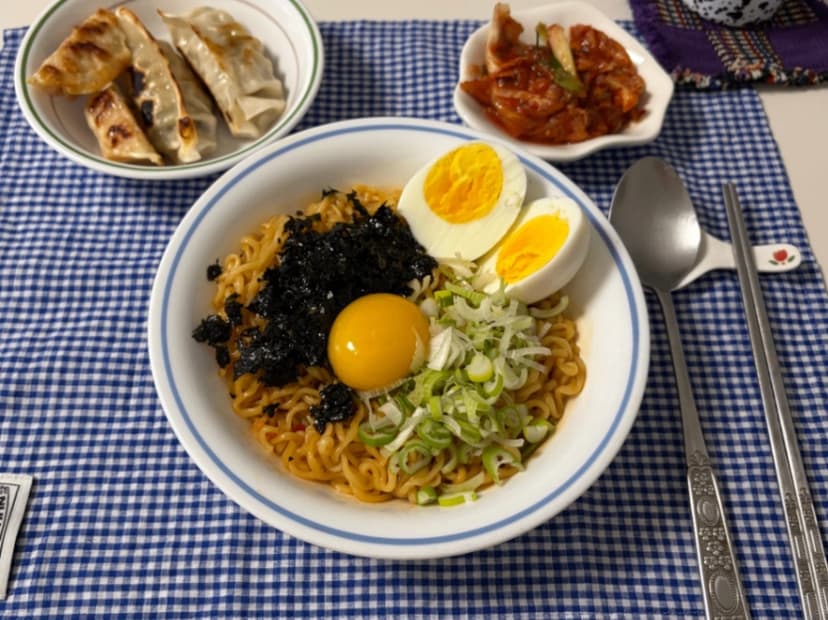
Opened a Japanese Restaurant with Shin Ramyun, Shin Ramyun Abura Soba
Ramen, the quick meal that Koreans simply cannot live without.
When I’m busy and in a rush, ramen is the first thing I reach for too. Of course, there are many types of ramen out there, but when you eat it too often, don’t you sometimes crave a different way to prepare it? The dish I’m introducing today is exactly that. We’re going to make Abura Soba using the ever-familiar Shin Ramyun. Abura Soba is a portmanteau of abura (oil) and soba (noodles), referring to a brothless ramen mixed in an oil-based sauce. Anyway, today I’ll introduce you to Shin Ramyun Abura Soba, a dish that will turn your humble studio apartment into a Japanese restaurant with just a single pack of ramen.
Let’s look at the ingredients
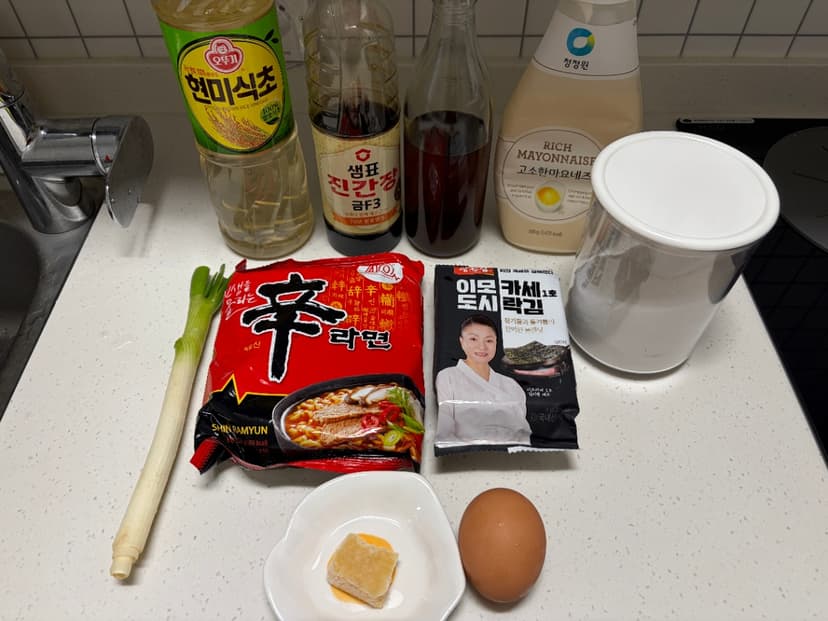
| Ingredient | Amount | Substitute |
|---|---|---|
| Water | 500ml | - |
| Shin Ramyun | 1 pack | Spicy ramen |
| Seasoned seaweed | 1 pack | - |
| Green onion | 1/2 stalk | - |
| Egg | 1 | - |
| Sesame oil | 1 tbsp | - |
| Soy sauce | 1/2 tbsp | - |
| Vinegar | 1/2 tbsp | - |
| Sugar | 1/2 tbsp | - |
| Mayonnaise (optional) | 1/2 tbsp | - |
| Minced garlic (optional) | 1/2 tbsp | Whole garlic |
If you don't have Shin Ramyun, please substitute it with another type of spicy ramen.
Let’s look at the recipe
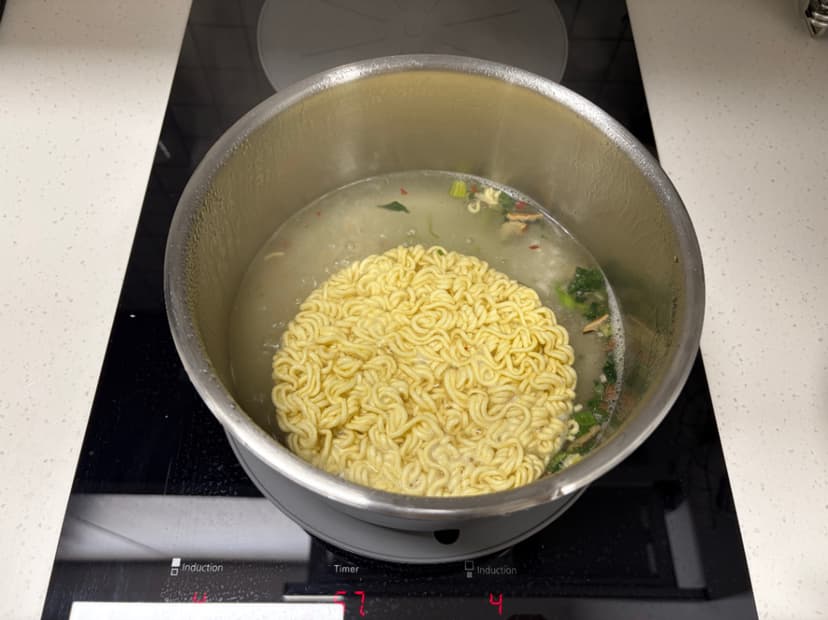
1. Boil 500ml of water in a pot, add the noodles and flakes, and cook.
Make sure to skip adding the powder soup here, as we need to use it later to make the sauce.
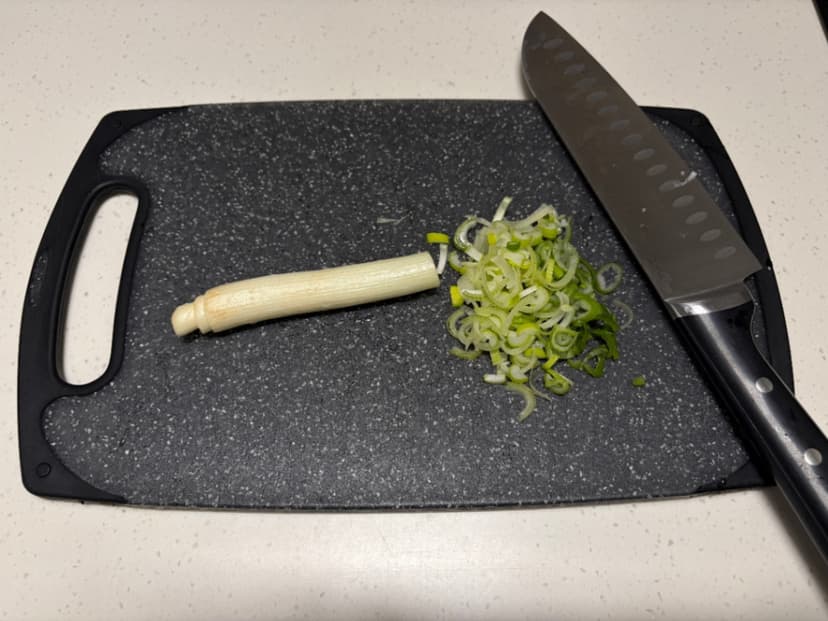
2. Chop 1/2 stalk of green onion.
While the noodles are boiling, chop 1/2 stalk of green onion to add later. I love green onions so I chopped and added a whole stalk, but I ended up tasting way too much of the raw onion spice.
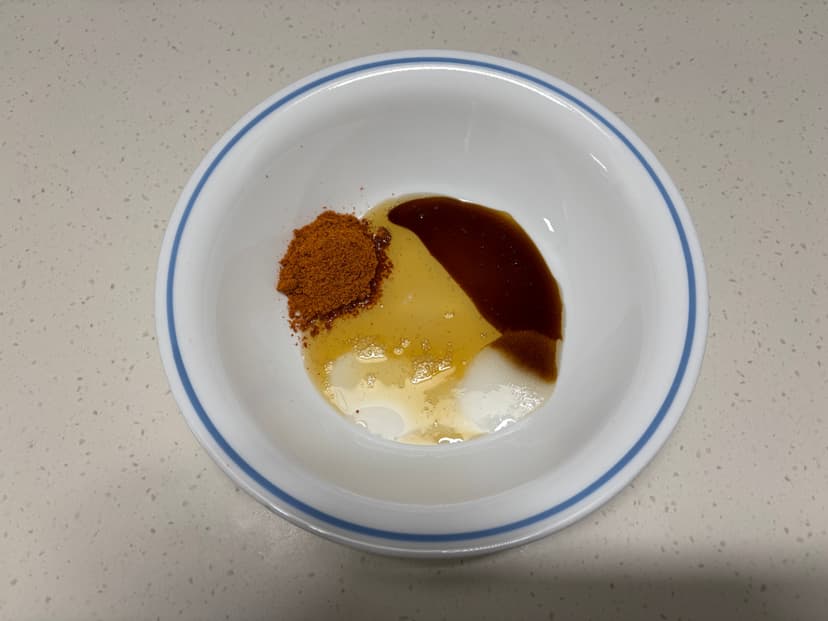
3. Golden Sauce Ratio: 1/3 of the powder soup, 1/2 tbsp each of soy sauce, vinegar, and sugar, and 1 tbsp of sesame oil.
Just mix all the sauce ingredients in a bowl. Make sure to mix it well so it doesn’t clump up when you add the noodles later. If you prefer a saltier taste, simply add a bit more of the powder soup.
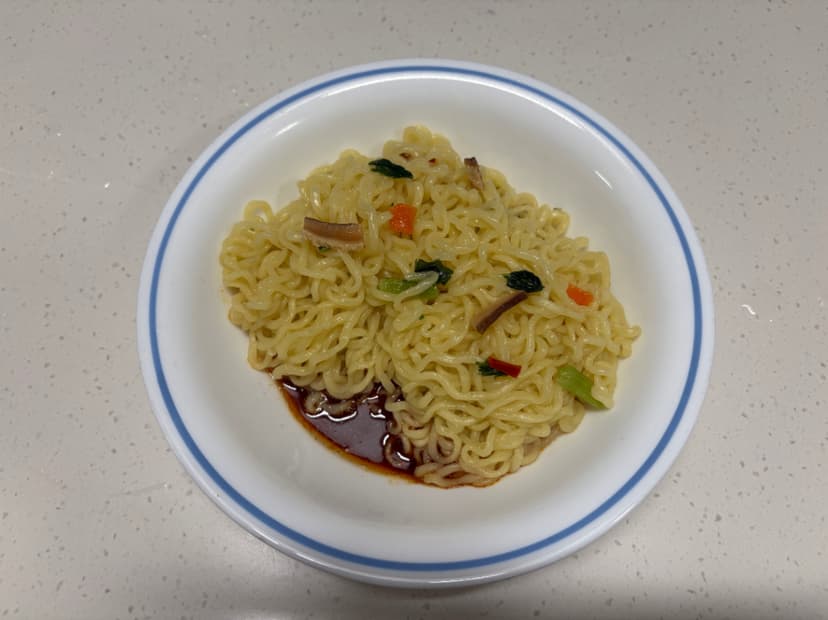
4. Transfer the cooked noodles to the bowl and mix them with the sauce.
Once the noodles are fully cooked, drain the water using a strainer, transfer them to the bowl, and mix them together with the sauce. You’ll see the noodles soaking up the sauce like a sponge.
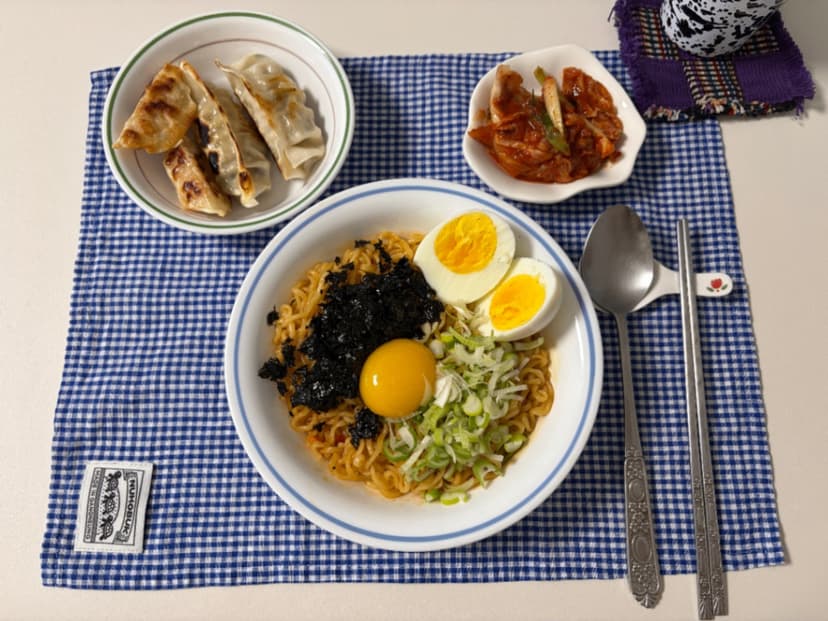
5. Finish by topping with egg yolk, seaweed flakes, and green onions.
Just top it with the chopped green onions, seaweed flakes, and egg yolk from earlier, mix it up, and eat. It pairs exceptionally well with eggs, so I even added an extra boiled egg on the side.
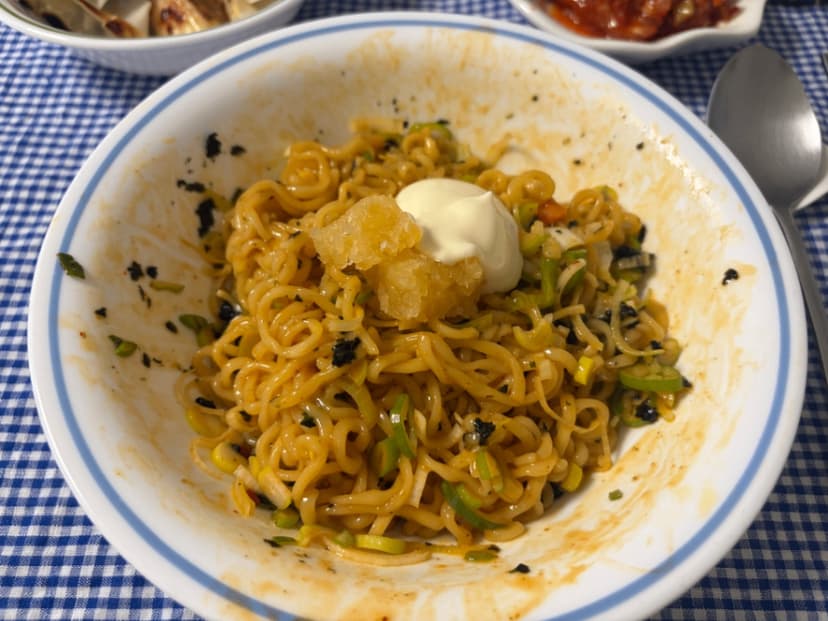
6. If you want to add more flavor, mix in 1/2 tbsp each of mayonnaise and minced garlic.
If the flavor feels a bit flat while you’re eating, add 1/2 tbsp of mayo and 1/2 tbsp of minced garlic. This will give you an intense flavor that sits somewhere between Abura Soba and Mazesoba.
It’s delicious even without the mayo and minced garlic, so adjust according to your preference.
Ramen shop owners across the country, watch out.
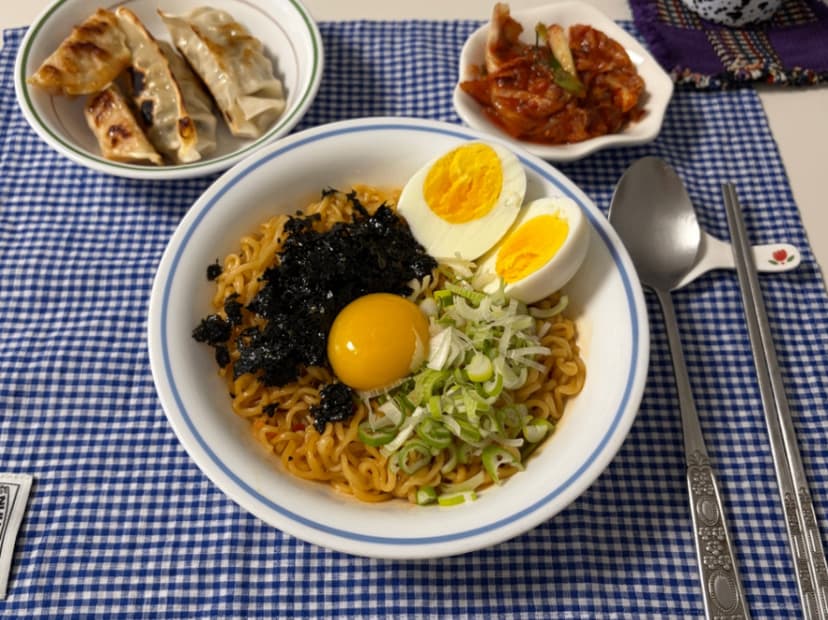
Today, I basically “opened a ramen shop” using a single pack of Shin Ramyun. I was super surprised because it tasted much more authentic than I expected.
The peppery (?) kick from the ramen seasoning really stands out, but the sesame oil and egg yolk mellow it out nicely, creating a perfect balance. Personally, I liked it better when I added the mayo and minced garlic halfway through, as it provided a much richer flavor. I highly recommend you try it like I did: enjoy the original flavor at first, and then mix in the extras halfway through.
With this level of taste, it’s enough to open a ramen shop that makes owners across the country nervous… well, maybe not quite, but it’s definitely a great recipe to try at least once when you’re tired of regular ramen.
I hope you can also lightly dream of opening your own shop at home like I did, and I’ll be back next time with another useful recipe. Have a delicious day!