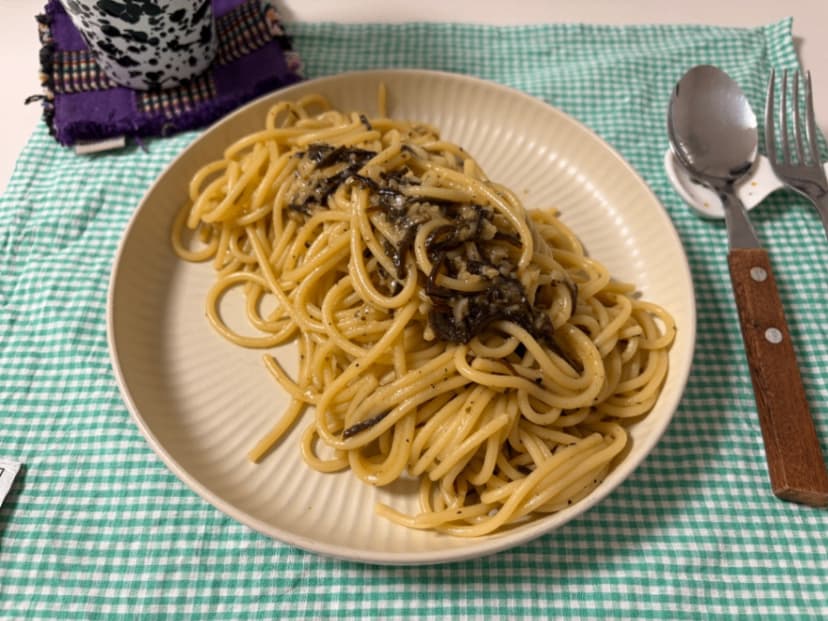
Noodles, kelp, done. Shiokombu Pasta.
Here you go! I’ve placed the translated text inside a code block so you can easily copy and paste it with all the markdown formatting intact. When you think of kelp, you think of Neoguri noodles, and vice versa. As a Korean, the first thing that comes to mind when I hear ‘kelp’ is definitely Neoguri ramen. However, for Japanese people, ‘shiokombu’ is probably what comes to mind first. Literally translated, shiokombu means ‘salted kelp.’ In Japan, it is actually widely used in various dishes like rice balls (onigiri), salads, and rolled omelets (tamagoyaki). Thanks to its salty yet strong umami flavor, it has recently gained a lot of popularity on Korean social media as well. As a total trend-chaser, I couldn’t resist buying some myself. So today, I’m going to make Shiokombu Pasta, which is so incredibly simple to make that it’s often called ‘the commoner’s pasta’.
Let’s look at the ingredients
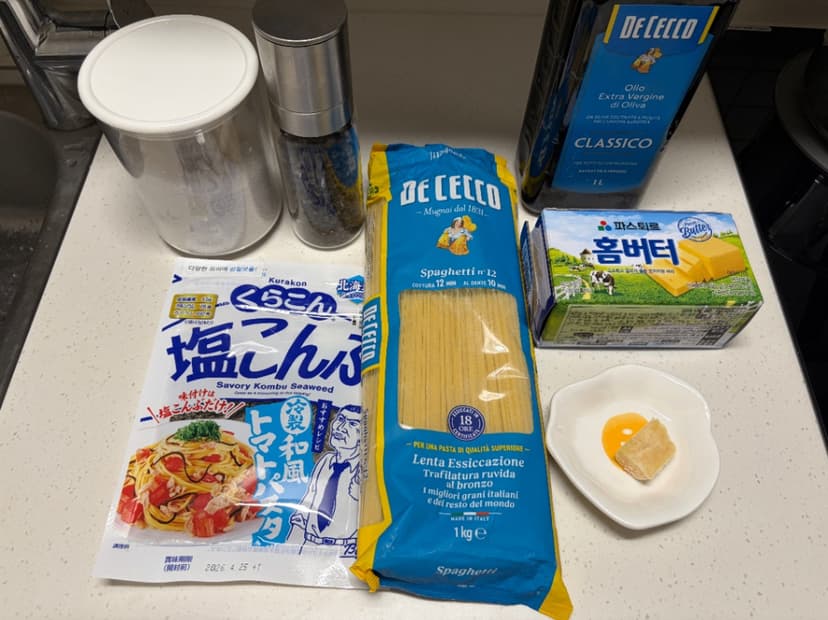
| Ingredient | Amount | Substitute |
|---|---|---|
| Water | 1L | - |
| Pasta noodles | 100g | - |
| Olive oil | About 10 tbsp | - |
| Black pepper | To taste | - |
| Salt | 2/3 tbsp | - |
| Shiokombu | 3 pinches | - |
| Butter (optional) | 1 pat | - |
| Minced garlic (optional) | 1/2 tbsp | Whole Garlic |
Introduction to Shiokombu
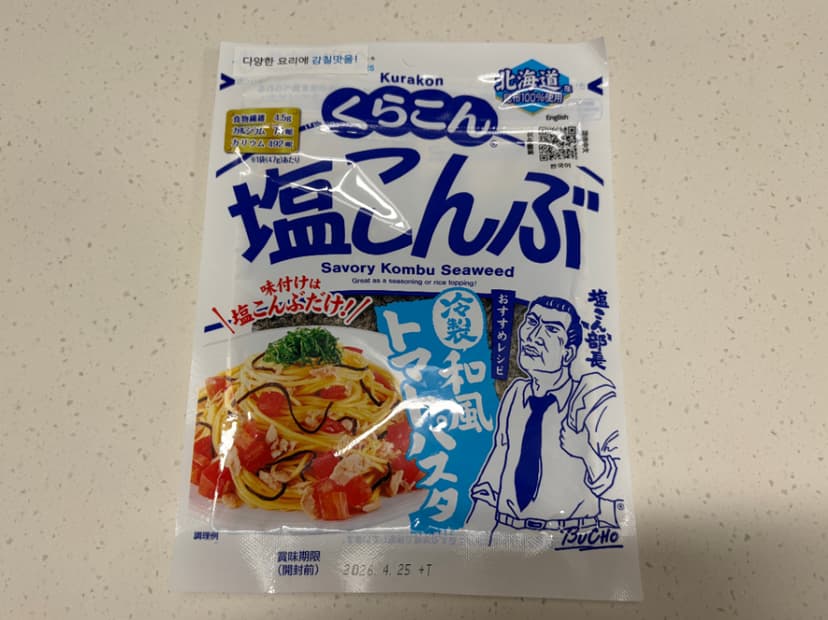
The one I bought is Kurakon’s shiokombu from Japan. You can easily find it on Coupang, and I bought it for about 6,000 KRW. If you just want to taste it first, I recommend starting with the 47g size like I did before committing to a larger bulk pack. The top has a ziplock, making it easy to store.
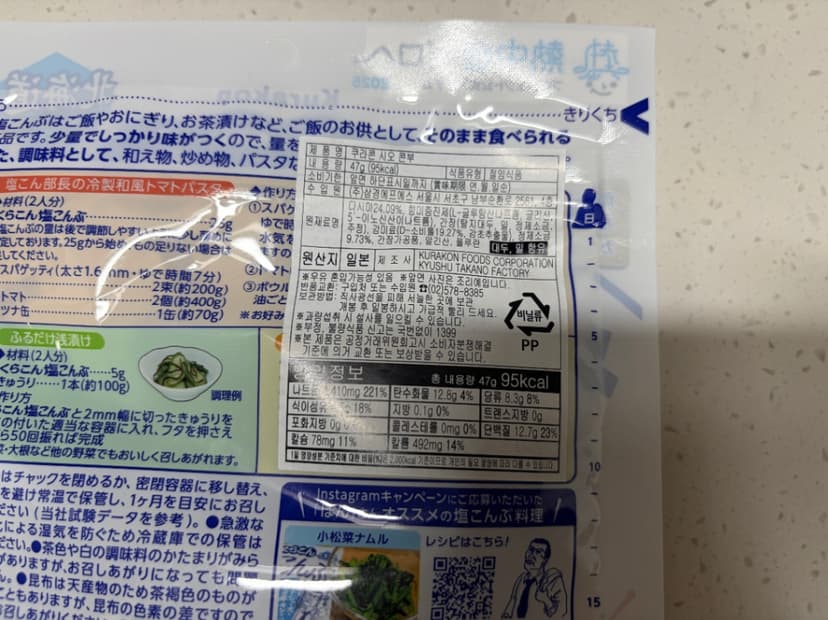
Here is the nutritional information. At 95 kcal per 47g, the calories aren’t high, but since it’s salted kelp, the sodium level is quite high. You can just think of it as a seasoning used instead of salt. I bought mine in November 2025, and the expiration date is April 2026. This is on the shorter side for a seasoning, so keep that in mind when using it. Now, shall we get to cooking?
Let’s look at the recipe
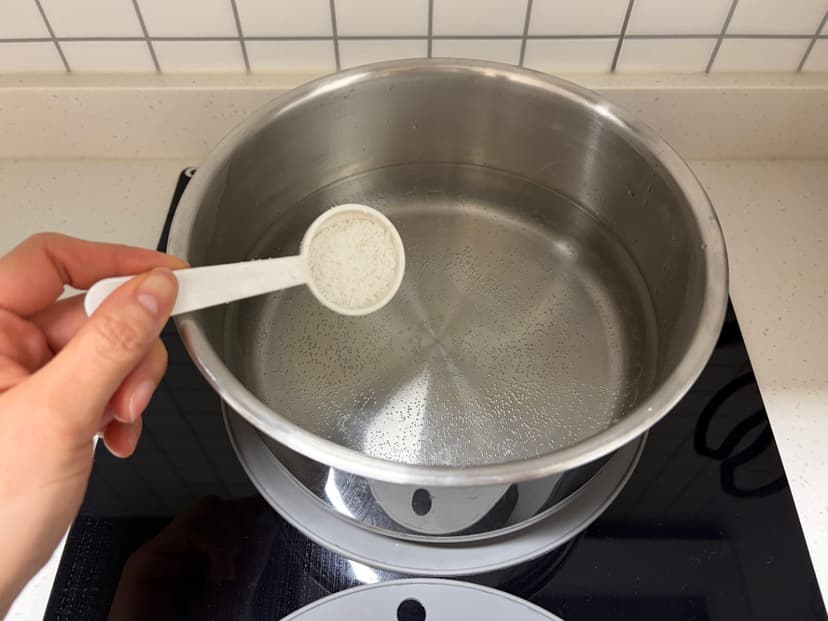
1. Boil 1L of water with 2/3 tbsp of salt.
As always, boil the water with some salt. If you want to prevent the noodles from sticking, add a splash of olive oil.
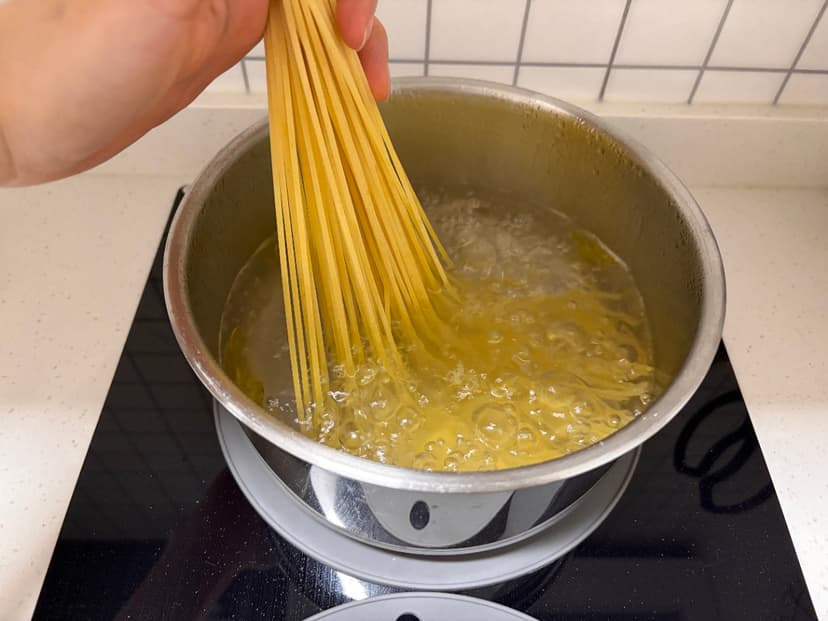
2. Add 100g of pasta noodles to the boiling water and cook for 8 minutes.
The De Cecco pasta I used takes 10 minutes for al dente, so I cooked it for -2 minutes (8 mins). The key to shiokombu pasta is extracting enough starch using the pasta water, so you have to account for the extra cooking time in the pan later. Please adjust the time according to the specific noodles you are using.
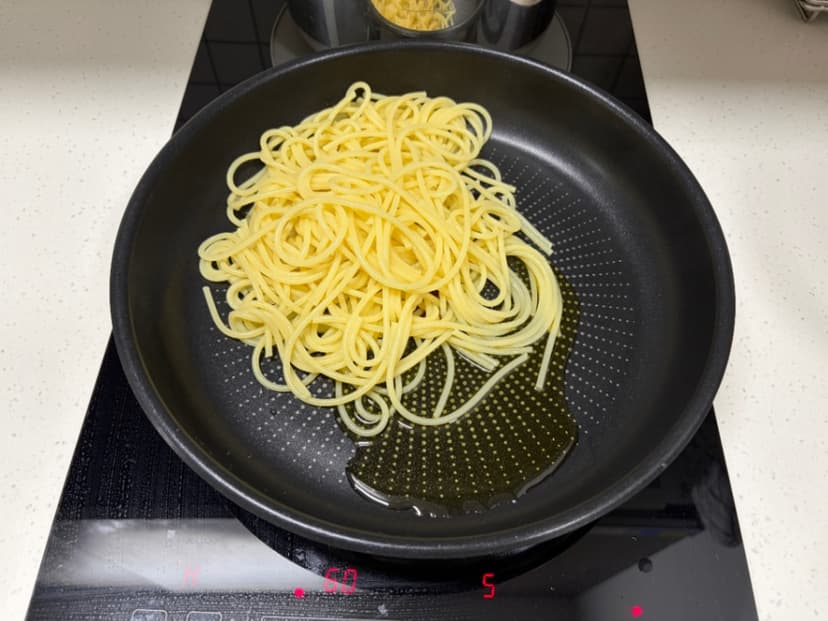
3. Add olive oil and the cooked pasta to a pan and sauté.
Once the noodles are cooked, add 3 tablespoons of olive oil and the pasta to a pan and cook them together. Keep the heat on medium-high, as we’ll be extracting the starchy water.
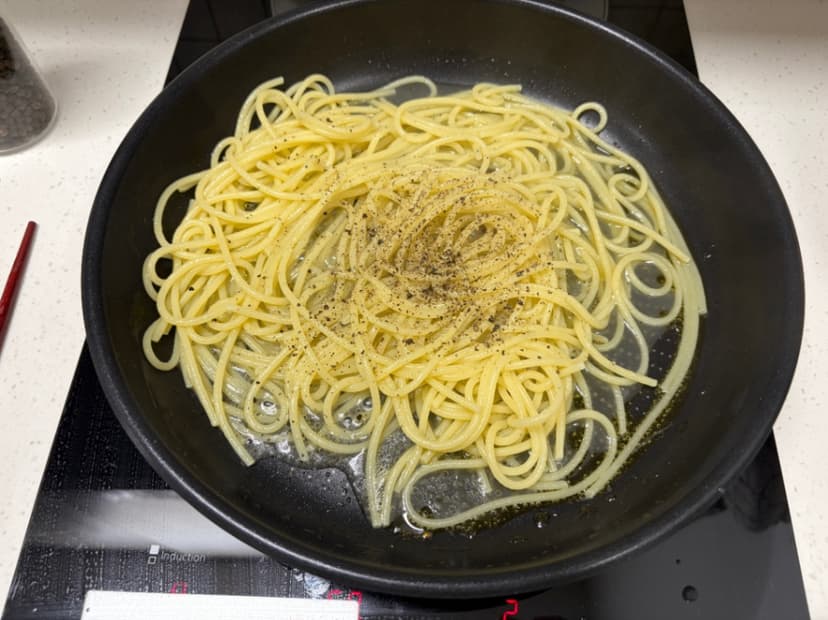
4. Add black pepper and pasta water to create a starchy sauce.
Since we are adding both shiokombu and pasta water, skip the salt. Add the pasta water one ladle at a time, using about 3 ladles in total, to extract enough starch. You’ll know it’s a success when it reaches a thick, creamy texture.
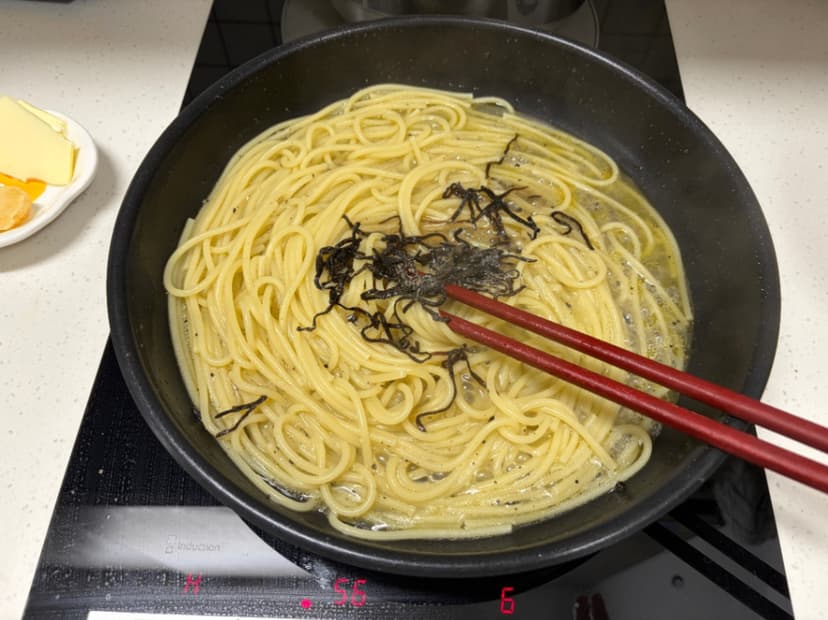
5. Add three pinches of shiokombu.
If you prefer a milder, less salty taste, just add two pinches!
6. Add 1/2 tbsp of minced garlic and 1 pat of butter.
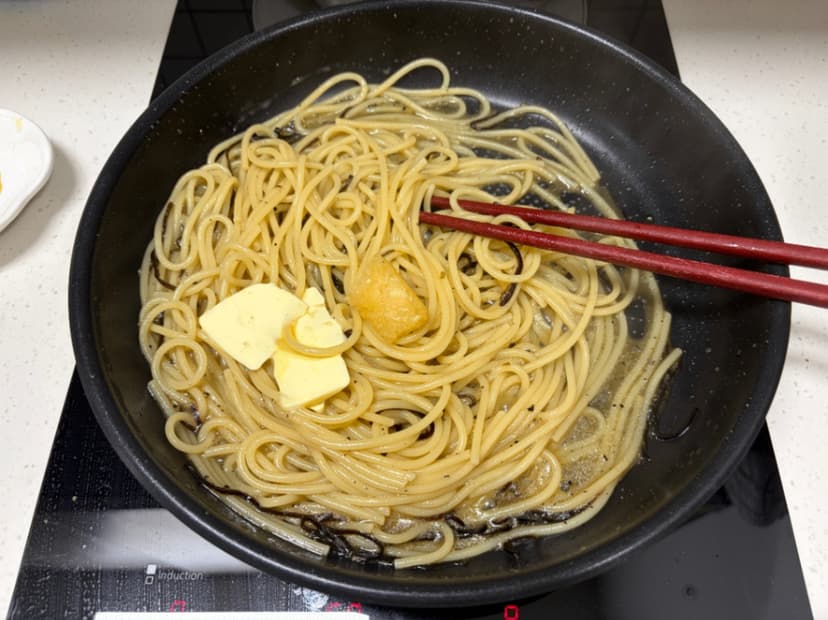
If you stop cooking at step 5, you’ll have a completed oil pasta with a unique umami flavor. But if you want an even stronger, richer flavor, go ahead and add the minced garlic and butter.
The minced garlic and butter are optional. Add them according to your preference.
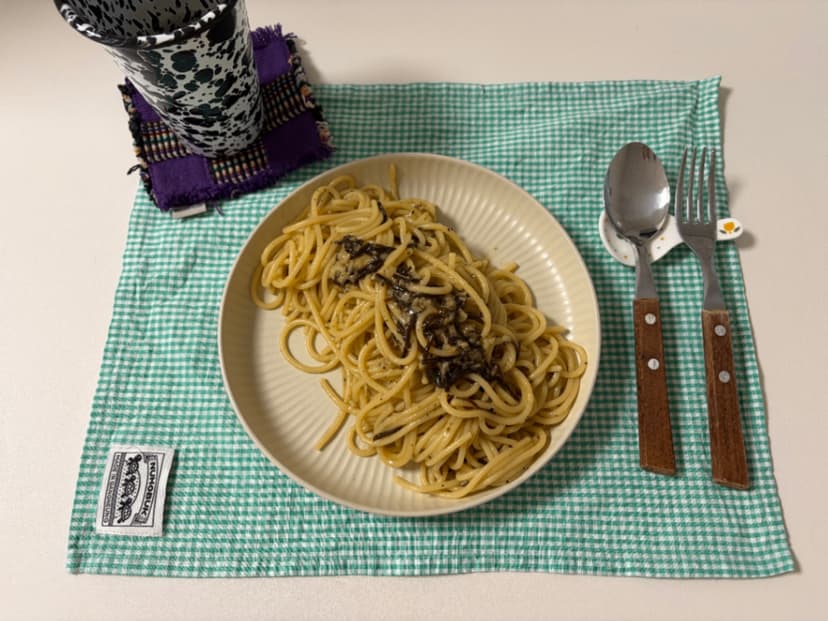
7. Plate the dish and enjoy the taste of the commoner.
And just like that, the ‘commoner’s pasta’ is already done. Now, just enjoy your shiokombu pasta.
The ingredients may be humble, but the taste is noble.
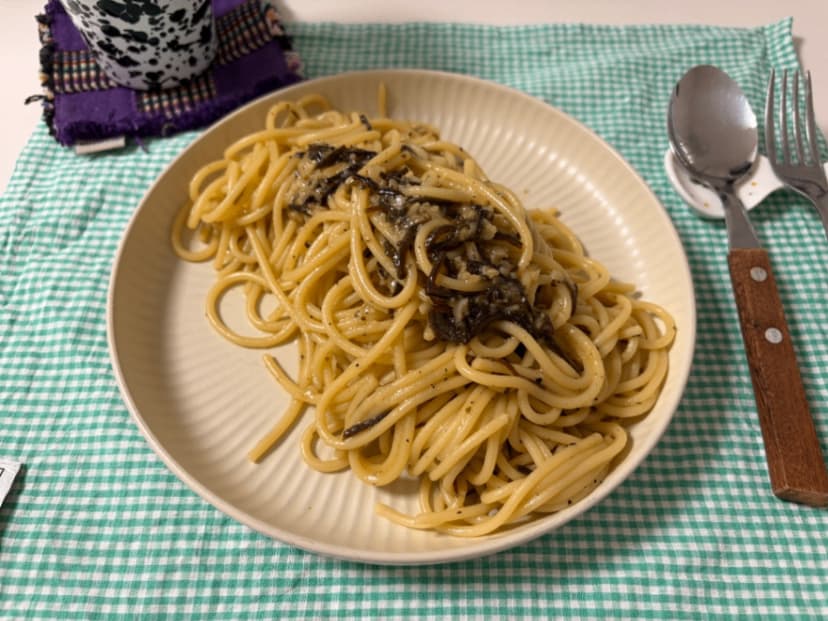
Today was my first time using shiokombu as well. At first, you might think, ‘Making pasta with kelp?!’ but its flavor actually isn’t screaming ‘I AM KELP!’ as much as you’d expect. Instead, it plays an excellent supporting role, backing up the other ingredients with a deep umami hit and elevating the overall flavor. I think it’ll be a great secret weapon to use occasionally in my cooking.
When Aglio e Olio feels like it’s missing a little something, some people add a splash of fish sauce. I feel like shiokombu would be a fantastic alternative for that. Some add butter and garlic like I did, while others add lemon juice and lemon zest. It seems like there’s a lot of fun to be had in exploring and tasting different variations of shiokombu pasta.
It might not be a meal fit for a King, but it’s definitely fit for a Nobleman! That concludes my introduction to Shiokombu Pasta. Since the ingredients are so simple, buy some shiokombu on payday, and use it to whip up a satisfying meal during that “broke season” at the end of the month.
Well then, I’ll be back next time with another delicious recipe. Have a tasty day!